Do DNA Diets Actually Work? Find out now.

Do DNA Diet Tests Actually Work?

Do DNA Diets Actually Work

According to the Human Genome Project, the human genome has between 20,000 to 25,000 genes. Also, the science of nutrigenomics is progressing every day.

The biggest problem with the articles that look down DNA diets is that they don’t explain the difference between basing a diet on a single gene and using a complex algorithm which factors in hundreds of genes.

However, single genes can still have a big impact. 

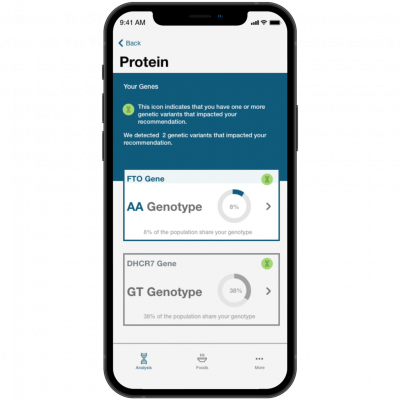
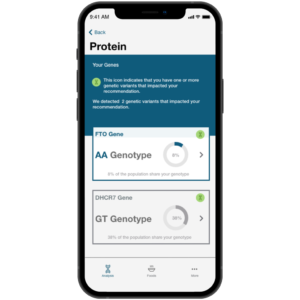
For example, one Harvard study found that people with a specific FTO gene variation lost a lot more weight on a higher-protein diet.

These types of studies are vital in helping us overcome the current one-size fits all diets that don’t look at us as individuals.

So the answer is yes, a diet plan based on DNA can certainly work, especially if it looks at a significant range of your genes instead of just a couple.

What does a DNA diet plan look like?

What a diet plan based on DNA looks like depends on who (or what, in the case of algorithms) created it.

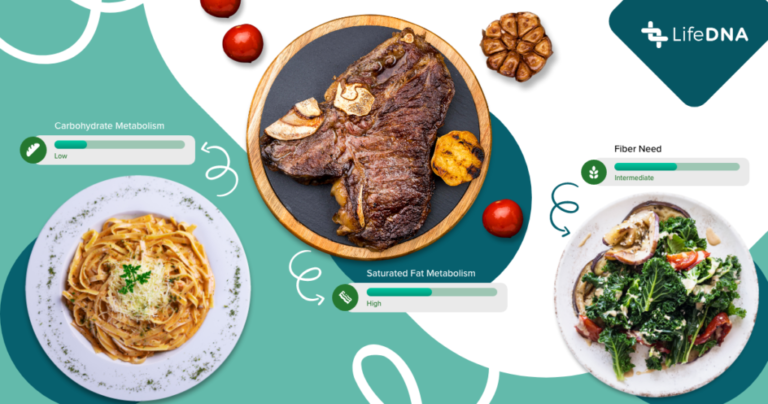
A good DNA diet plan will not only tell you what you should and shouldn’t be eating, but why, and give you actionable advice on how to optimize your diet based on your genes.

Not all types of DNA diets do this.

For instance, if your caffeine sensitivity genes show that overall, you’re moderately sensitive to caffeine, a good DNA diet plan will tell you exactly how much is safe to consume: maybe two to four cups a day.

It will also give you a breakdown of all the genes that the algorithm has analyzed to come to that conclusion.  We currently know of five genes that affect how your body deals with caffeine.

Caffeine sensitivity is affected in two basic ways:

First, you may metabolize caffeine more slowly, which increases your sensitivity to its effects.

Second, caffeine may lower your bone density, depending on your genetic variations.

At LifeDNA, we combine these two factors to determine how much caffeine you can safely consume in a day.

A good DNA diet plan will also give you the references to the scientific studies that your advice is based on.

pexels-gagan-cambow-1170659

What are the best DNA diet tests?

Your results should be crystal-clear, simple, specific and actionable.

Because knowing that you should consume less caffeine, for instance, isn’t giving you the information you need to change your behavior. You also need to know why you need to cut your coffee intake (what could happen if you don’t), and exactly how many lattes you can get away with.

You should also look for reports that present their information in a clear, compelling and attractive way. You’ll be seeing and digesting a lot of complex data: looks count for a lot here.

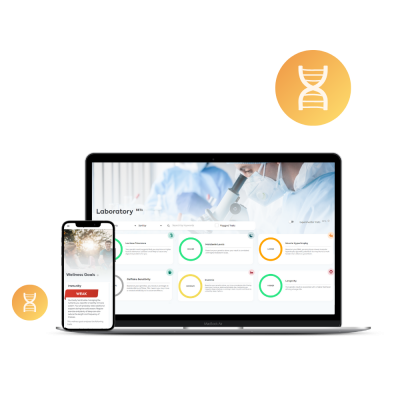
LifeDNA
Email Marketing - 2022-11-02T162838.729

Advantages of LifeDNA

  • The ever-evolving library of genetic reports continues to grow week-on-week, responding to the latest research on the human genome.
  • Reports are plain, simple, and actionable. You’ll instantly know what kind of changes you need to make to the way you eat and live.
  • A proprietary algorithm powered by machine learning is used to ensure each report is the most accurate on the market. 
  • LifeDNA also provides an exclusive membership with benefits including 1-on-1 consultations, unlimited updates, genomics newsletters, and Facebook community.
  • Our platinum membership uses the latest discoveries in genetic science to give you up-to-the-minute information on how to eat according to your individual DNA. 

Disadvantages of LifeDNA

  • LifeDNA doesn’t provide ancestry information.
  • We only ship initial testing kits to the US and Canada (but you can upload your genetic data from other providers).
  • The company doesnt provide information on cancer risk.

Genopalate
Geno-Palate-Report-2-1-1024x1024

Advantages of Genopalate

  • Great for foodies
  • Hundreds of recipes on their website
  • PDF printout with all the information you need
  • Own line of supplements

Disadvantages of Genopalate

  • Simple genomic testing that doesn’t employ AI or machine learning
  • Nutrition and food information only
  • Supplements are expensive
  • Customer service team is difficult to reach

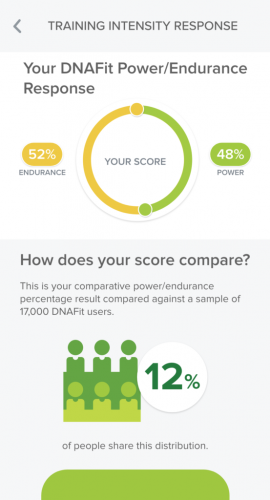
DNAFit
DNAFit-Sample-Report-2-576x1024

Advantages of DNAfit

  • You can get reports on both your health and fitness potential
  • You can upload your 23andme raw data, for a fee
  • A one-off coaching session comes with the price
  • There is a money-back guarantee (subject to terms and conditions)
  • There are no ongoing subscription fees as they don’t offer membership

Disadvantages of DNAfit

  • You can’t upload your raw DNA data to use through other companies
  • Sometimes the health recommendations are generic
  • The cost of the premium CircleDNA report with ‘whole exome sequencing’ is high ($629)
  • Some customers report long wait times 

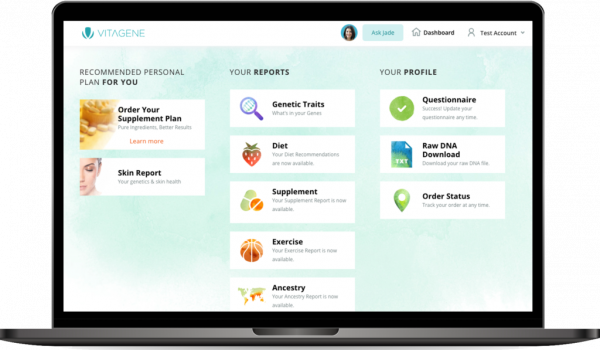
VitaGene
Vitagene-Report-3-1024x775

Advantages of VitaGene

  • Non-DNA food sensitivity testing
  • Ancestry and health information
  • One-off payment with a lot of options to choose from
  • Option to delete information

Disadvantages of VitaGene

  • No AI or machine learning
  • No subscription option
  • History of data breach
  • Results can take a long time to arrive

Are DNA diet tests accurate?

DNA diet tests are very accurate at revealing the specific genes that you carry. The science behind the cheek swab tests is trusted by experts worldwide. There’s no question that they’re both reliable and accurate.

However, if your question is really ‘will my DNA diet test make me lose weight/feel healthier’, the answer isn’t so simple.

That’s because your health and wellness depends on so much more than just your genes. While your genes are a crucial and undeniable part, there’s a massive environmental component too. 

For instance, we know that the 100 trillion bacteria that make up your microbiome have a huge impact on your ability to tolerate gluten. 

So, your genes might say you should be able to digest bread without a problem, but if your gut bugs say different, you could feel better staying away from sandwiches. 

Are DNA diets the same as other weight loss diets?

No, DNA diets aren’t the same as other diets.

For a start, most DNA diets aren’t about losing weight: they’re about maximizing your health and longevity. 

Sure, some genes affect how easy or hard it is for you to lose weight, but that’s usually not the focus of a DNA diet.

Most weight loss diets focus on depriving yourself and being hungry. DNA diets focus on making the most out of your own individual body and metabolism to make losing weight a healthier and more pleasant experience, if that’s what you want to do.

Final Thoughts

DNA diets do work: we have the science to prove it.

Saying DNA diets don’t work is like saying that we can’t predict the weather because sometimes meteorologists get it wrong. 

We can’t base our conclusion about a whole area of science on one-off examples and small-scale studies.

DNA diets have the power to revolutionize your life, if you use them as one part of a toolkit that takes into account the rest of the factors that make and maintain health.

Your DNA isn’t your fate, but it can put you on a path to wellness and give you a map to help you get to the summit.

*Understanding your genetics can offer valuable insights into your well-being, but it is not deterministic. Your traits can be influenced by the complex interplay involving nature, lifestyle, family history, and others.

Our reports have not been evaluated by the Food and Drug Administration. The contents on our website and our reports are for informational purposes only, and are not intended to diagnose any medical condition, replace the advice of a healthcare professional, or provide any medical advice, diagnosis, or treatment. Consult with a healthcare professional before making any major lifestyle changes or if you have any other concerns about your results. The testimonials featured may have used more than one LifeDNA or LifeDNA vendors’ product or reports.


Does genetics have a great impact on sleep?

Does genetics have a great impact on sleep

Sleep is critical at any age, according to scientific evidence. Sleep recharges the mind, recovers the body, and strengthens your well-being.

However, certain genetic variants may impact your sleep patterns and habits, causing you to be unable to fully maximize these benefits.

What is the ideal amount of sleep for you?

Adults require 7 or more hours of sleep per night, according to the CDC, for optimal health and well-being.

Your DNA Can Influence Your Sleep Patterns and Habits

 Sleep is critically important for your well-being.

Depending on your DNA, you may have a higher likelihood of insomnia as compared to others. 

Insomnia is a sleep disorder that is characterized by difficulty falling asleep or staying asleep. 

Certain genetic variants may also impact the number of hours your sleep at night and how deep your sleep is. 

Some genes that have been linked to genetic differences in usual sleep duration are your PAX8, ABCC9, and CLOCK genes. 

Want to get personalized health insights into your DNA? Check out LifeDNAs latest DNA plans today. 

Here Are 6 Effects of Sleep Loss

Getting enough sleep is critical for optimal health. It is important to maintain six or more hours of sleep every night to prevent your risks and promote healthy well-being.

  • Poor sleep can affect your performance at work.
  • You are more likely to gain weight.
  • It may increase your risk for serious health problems such as stroke, diabetes, and many others.
  • Not getting enough sleep can kill the sex drive.
  • It can lead to depression.
    Your skin may age faster due to lack of sleep.


4 Things You Can Do Tonight To Get More And Better Sleep 

Late-night Netflix may be ruining your sleep and forcing you to gain more weight.

With lifestyles that involve working for long hours or raising kids, sleep may be one of the many important things that we don’t get to take advantage of everyday.

It makes it hard to wind down and get a good night’s rest, especially when we have to stay up late to catch up on our responsibilities.

We miss out on sleep just to stay productive, but it’s ultimately ruining our ability to focus and stay awake.

But more importantly, getting more and better sleep can actually help you have more energy and less body fat. 

It’s also great for lowering your risk of cancer and boosting your brain performance.  

Getting better sleep is surprisingly easy, and you can get a long list of benefits from it, including:

  • Lower body fat.
  • Improved cognition.
  • Lower risk of cancer.
  • Improved memory.
  • Less stress and less painful inflammation.

So try these tips tonight. They could seriously improve your whole life.

#1: Avoid eating close to bedtime.

Not only does this cause acid reflux, but eating within a few hours of bedtime will disrupt your sleep cycles and can mess with your blood sugar levels.

Give yourself at least 2 hours between your last bite and bedtime.

#2: Light will seriously kill your sleep (even if it’s a dim light for reading).

In one study, people who were exposed to low levels of light had higher levels of insulin resistance.

This could have significant negative impacts on our metabolic function, including a higher risk for obesity.

The light exposure was measured at 100 lux, a relatively small amount of light, at which it would be difficult to read a book. 

Sleeping in a dark room with effective shades (and no late-night Netflix or smartphone use) may have noticeable benefits on your very first night.

#3: Indulge in naps.

While resting on a regular schedule is usually recommended, a 30-minute nap can have huge benefits for your brain.

In fact, research shows that naps can reduce your risk for heart disease while improving your productivity and mental clarity.

Just don’t allow yourself to sleep longer than 30 minutes, as this can cause drowsiness.


Between work, family, and simply trying to survive, getting the recommended 8 hours of sleep may be impossible. 

However, if you can sneak in a nap, you may enjoy increased productivity, clarity, and health.

You can boost your overall wellness by improving your lifestyle habits. 

Sleep is just one of the many factors that can help you live a healthier and more fulfilling life.

You also need the right foods, exercises, and vitamins that would work best for your unique body. 

A DNA test can reveal the nutrients, workouts, and lifestyle habits that can help you improve your sleep and overall wellness. 

Explore your DNA now at blog.lifedna.com.

*Understanding your genetics can offer valuable insights into your well-being, but it is not deterministic. Your traits can be influenced by the complex interplay involving nature, lifestyle, family history, and others.

Our reports have not been evaluated by the Food and Drug Administration. The contents on our website and our reports are for informational purposes only, and are not intended to diagnose any medical condition, replace the advice of a healthcare professional, or provide any medical advice, diagnosis, or treatment. Consult with a healthcare professional before making any major lifestyle changes or if you have any other concerns about your results. The testimonials featured may have used more than one LifeDNA or LifeDNA vendors’ product or reports.

Genopalate vs Vitagene vs Genomelink vs LifeDNA

Genopalate vs Vitagene vs Genomelink vs LifeDNA

Genetic testing is big business.

Advances in technology have made home genomic testing accessible to all, and the result is an explosion in providers who all seem to offer a similar service. 

So how do you choose the right one for you?

Read on to get the lowdown on some of the latest players in genetic testing.

We’ll be doing a head-to-head between:

  1. LifeDNA
  2. GenoPalate
  3. VitaGene
  4. Genomelink

Here’s the TL;DR…

  • LifeDNA is the best for you if you’re looking to improve every aspect of your health from all angles.
  • Genopalate is great for foodies: their reports tell you what food to eat, the best supplements to take, and suggest recipes for you to try.
  • Vitagene offers a range of genetic reports—at every price point—on diet, exercise, skin, supplements, and more.
  • If you don’t want to spend any money and you’ve already got your raw genetic data, Genomelink’s free 25 trait report is a great place to start.

LifeDNA

LifeDNA is a DNA testing company founded in 2017 by CEO Cyril Moukarzel and chairman Steve Markowitz. 

From our base in Hawaii, we create fully comprehensive health plans for people who want to use the latest discoveries in genetics to optimize their bodies and minds.

Our purpose is to make people healthier, happier, and stronger by reaching their genetic potential. We do this through six extensive, easily actionable, constantly updated ‘live’ reports covering more than 120 unique genetic traits (and counting).

How does it work? What do you get?

If you’ve already taken a DNA test from 23andMe, Ancestry.com, MyHeritage, Family Tree DNA, or Living DNA, you can upload your raw DNA data to LifeDNA and get the full range of reports instantly.

You can also get a test kit with a cheek swab sent to your home.

The test you take and the genetic insights you get are just the beginning of your journey. Life DNA’s platinum membership gives you lifetime access to:

  • Six massive reports on everything from what you should be eating  to how you can maximize your fitness or optimize your health, regularly updated with the latest findings in genetic science
  • Quarterly consultations with experts to get the best out of all the latest research
  • A private Facebook group to connect with our global community of users and scientists
  • DNA targeted nutrition suggestions for fat/protein/carb breakdowns, ingredient lists, shopping lists, recipes, and and more.
  • A progressive, future-focused service with reports based on a unique algorithm created by our genetics, genomics, and bioinformatics specialists 

LifeDNA’s genomics team brings out new reports and traits on an almost weekly basis, but here’s a small sample of what you can expect:

Nutrition report

Fitness report

Immunity and Vitamins report

  • How well you absorb specific vitamins, minerals, and nutrients
  • Which vitamins & supplements to take, how much, and why
  • How strong your immune, cardiovascular, liver, brain, and gut health are

Skincare report

Personality and Cognition report

Over 30 personality traits according to your genetic fingerprint. Includes:

  • Resilience
  • Risk-taking 
  • Likelihood to develop depression
  • Intelligence
  • And more


  • General potential for health and wellness 
  • Longevity
  • Likelihood to experience insomnia
  • Your body’s natural inflammatory response and detoxification ability
  • And more

How do they do it?

LifeDNA’s genomics team reviews the latest peer-reviewed studies that correlate specific genetic markers with specific traits. Then their bioinformatics team expands that list by using machine learning.

Once your DNA data is uploaded, any new reports LifeDNA’s scientists have created are automatically generated because the algorithms are already in place.

In a nutshell, you get to maximize your own individual health and wellness based on the very latest science for life.

LifeDNA Cost

  • $39 for the first report with your own raw DNA data from 23andMe, Heritage.com, or Ancestry
  • $199 for an at-home DNA test and your report bundle.
  • $129 for your report bundle that is accessible if you’ve already taken a test in the past.

LifeDNA Privacy & Security

Privacy & security are critical at LifeDNA.

That’s why we recently appointed an industry-leading security expert to make sure that our security is level with the world’s most important organizations

We understand how vital DNA data is and treat it very seriously. 

Selling customer data is not our business model: we exist to maximize people’s quality of life and increase their longevity.

All DNA data is encrypted and stored separately from consumer information.

Consumers are also free to request their data be deleted at any time.

Advantages of LifeDNA

  • LifeDNA’s ever-evolving library of genetic reports continues to grow week-on-week, responding to the latest research on the human genome.
  • Reports are plain, simple, and actionable. You’ll instantly know what kind of changes you need to make to the way you eat and live.
  • LifeDNA uses a proprietary algorithm powered by machine learning to ensure each report is the most accurate on the market. c
  • LifeDNA also provides an exclusive membership with benefits including 1-on-1 consultations, unlimited updates, genomics newsletters, and Facebook community.
  • Our platinum membership uses the latest discoveries in genetic science to give you up-to-the-minute information on how to eat, live and exercise according to your individual DNA. 

Is LifeDNA right for you?

LifeDNA is perfect for anyone who wants to maximize their health from every angle for the rest of their lives.

Our insights give you a 360-degree perspective on your own, individual potential, allowing you to optimize more than just the way you eat and exercise.

If you want to live your best life now and into the future, LifeDNA is right for you.

Looking to improve your overall health and well-being? Click here to get started on your DNA journey!

GenoPalate

GenoPalate was formed in 2016 as a way to help people understand nutritional science based on their personal genetic information. 

The company offers genetic testing, which focuses on various aspects of your metabolism, such as your ability to digest carbohydrates or process vitamins. 

Advantages of GenoPalate

  • Great for foodies
  • Hundreds of recipes on their website
  • Pdf printout with all the information you need
  • Own line of supplements

Disadvantages of Genopalate

  • Simple genomic testing that doesn’t employ AI or machine learning
  • Nutrition and food information only
  • Supplements are expensive
  • Customer service team is difficult to reach

VitaGene

The Vitagene team consists of experts in the fields of integrative medicine, genomics, computer systems, and product design who are committed to redefining wellness and revolutionizing preventative medicine.

How does it work? What do you get?

Like LifeDNA, Vitagene updates their reports according to scientific developments, but the company doesn’t use AI or machine learning to do that, which may make the updates less accurate.

They also provide personal coaching and consultations at an extra cost, and create their own supplements.

First, you purchase a product and either send in a cheek swab (saliva test) to be used for a DNA test or upload raw DNA data. There is also an online questionnaire about your lifestyle and goals.

To generate your report, Vitagene uses an algorithm developed by medical experts. It compares your DNA to a database of research on genomics, nutrition, and exercise. 

Vitagene Cost

There are a huge range of products and services, costing from $49 to $289.

Vitagene Privacy & Security

Vitagene stores DNA samples and results without your name or any other common identifying information. The third-party lab that processes your cheek swabs uses a barcode to identify your sample rather than your personal information. You can decide what happens to your saliva sample and DNA data. 

Vitagene also promises not to share information with any third party without your explicit consent.

Advantages of Vitagene

  • Non-DNA food sensitivity testing
  • Ancestry and health information
  • One-off payment with a lot of options to choose from
  • Option to delete information

Disadvantages of Vitagene

  • No AI or machine learning
  • No subscription option
  • History of data breach
  • Results can take a long time to arrive

Genomelink

Genomelink is a consumer genomics startup founded by experts who are passionate about the potential of genomics and the role it will play in our lives over the coming years.

Genomelink’s vision is to create an ‘infrastructure’ in consumer genomics.

They aim to deliver a fun experience, enabling their customers to learn more about DNA data in a completely transparent and accessible way.

How does it work? What do you get?

Genomelink uses your existing raw DNA data from services like AncestryDNA, MyHeritage, and 23andMe to give you additional insights into your DNA. This is done simply by uploading your raw data onto their website, which is free. 

It also offers a subscription model where you get weekly updates.

Privacy

Genomelink’s servers are set up with HIPAA-grade security, which means all servers meet the federal-level standard used to protect health and patient information. 

They promise never to sell your DNA data or test results unless given your explicit consent. You’re free to delete your data from their servers too.


Advantages of Genomelink

  • Instant access to free reports
  • Over 100 traits currently available for paying subscribers
  • The list of reports is constantly growing as research develops
  • Reports are fast: just upload your raw DNA data
  • You can compare your genetic traits with other Genomelink users

Disadvantages of Genomelink

  • At this time, the company only accepts test results from AncestryDNA, MyHeritage, and 23andMe
  • Genomelink doesn’t provide an at-home DNA test, so you have to get tested elsewhere first
  • If you want more than the free basic reports, you have to pay a subscription
  • Reports can be vague, with little actionable information

Final Thoughts

  • If you want to use the latest discoveries in human genomics to optimize your total health and happiness—now and into the future, from every angle—LifeDNA is your best bet.
  • If you’re a foodie who wants to reach your genetic potential through diet, you’ll love Genopalate.
  • If you already have your genetic data and you’d like to get more reports for free, check out Genomelink.
  • If you want food sensitivity testing and information on your ancestry on top of advice on nutrition and exercise, in a one-off report, Vitagene could be the one for you.

Looking to improve your overall health and well-being? Click here to start your DNA-personalized journey.

*Understanding your genetics can offer valuable insights into your well-being, but it is not deterministic. Your traits can be influenced by the complex interplay involving nature, lifestyle, family history, and others.

Our reports have not been evaluated by the Food and Drug Administration. The contents on our website and our reports are for informational purposes only, and are not intended to diagnose any medical condition, replace the advice of a healthcare professional, or provide any medical advice, diagnosis, or treatment. Consult with a healthcare professional before making any major lifestyle changes or if you have any other concerns about your results. The testimonials featured may have used more than one LifeDNA or LifeDNA vendors’ product or reports.
Are You More Likely To Binge Eat Based On DNA?

Binge Eating Discovered

People may tend to overeat from time to time. 

However, binge eating is a different matter. If you always eat a large amount of food in a brief period of time, even when you are not hungry, you’re probably binge-eating.

When you’re binge-eating. you’re also more likely to feel embarrassed or guilty about it.

Your genetics play a significant role in your diet and health, particularly your eating habits. LifeDNA has found 5 important genes that can influence your likelihood of binge-eating. 

What is considered binge-eating?

Binge-eating and overeating both include mindless activity. You eat excessively without considering why. 

However, there are significant differences.

Here are some examples of overeating:

  • Enjoying multiple desserts after dinner
  • Consuming an entire bag of popcorn while watching a movie

Here are some examples of binge-eating:

  • Consuming two or three burgers even when you’re already stuffed.  
  • Eating to the point of pain.
  • Eating a whole cake in one sitting and then feeling guilty. 
 

Your FTO Gene & Your Natural Eating Habits

A variety of genes influence your likelihood of binge eating. These genes have the potential to influence brain circuits that regulate hunger and mood.

One of the genes that our geneticists have looked into is your FTO gene

Your FTO gene is also linked to other traits such as:

How quickly do you metabolize saturated fats?

Trouble feeling full? Ask your DNA.

Appetite determines how much you naturally want to eat.

The food you love to eat is heavily determined by your genetics. 

Research suggests that for some people, genes account for 25% of their predisposition to be overweight/underweight, while for others, the genetic influence is as high as 70% to 80%. 

Want to get personalized diet insights tailored to your DNA? Check out our nutrition report now. 


Certain genetic variants may increase your likelihood of binge eating, but other factors including your lifestyle and environment can also trigger it.

Other external factors that can affect your binge-eating tendencies

Parents and families. 

If you often see your parents overeat, you’re more likely to pick up these behaviors.   The practices you acquire from the people around you may have an impact on your eating habits. 

Anxiety and Stress.

 People tend to binge eat after going through a serious, stressful situation. It is important to note that emotional eating is not always a sign of binge eating.

Depression. 

Depression may increase your likelihood of binge-eating. In fact, about 50% of people who tend to binge eat are also depressed. 

Excessive calorie restriction.

 An attempt to shed a few pounds might sometimes result in binge eating. This is particularly true when people try to lose weight by cutting meals or consuming too little. If they don’t attain their target weight, they may feel so bad about themselves that they overeat.

If you want to lose weight, the best DNA test will help you do that based on the way your own, individual body works. 

Final Thoughts

Binge-eating can lead to obesity, which is a risk factor for many diseases. 

That’s why it’s important to know your genetic predisposition to binge eating in order to get the right prevention management from health care professionals.

Already taken a DNA test with 23andMe, Ancestry, MyHeritage, Living DNA, or Family Tree DNA?

Upload your DNA to get personalized insights that can help you better manage your diet. You can learn more here. 

*Understanding your genetics can offer valuable insights into your well-being, but it is not deterministic. Your traits can be influenced by the complex interplay involving nature, lifestyle, family history, and others.

Our reports have not been evaluated by the Food and Drug Administration. The contents on our website and our reports are for informational purposes only, and are not intended to diagnose any medical condition, replace the advice of a healthcare professional, or provide any medical advice, diagnosis, or treatment. Consult with a healthcare professional before making any major lifestyle changes or if you have any other concerns about your results. The testimonials featured may have used more than one LifeDNA or LifeDNA vendors’ product or reports.
Do Weight Loss DNA Tests Actually Work?

Do Weight Loss DNA Tests Actually Work

 If you want to lose weight, the best DNA test will help you do that based on the way your own, individual body works.

The problem with most diets is that they assume we all have the same bodies, metabolisms, and genetic potential.

While a DNA diet alone won’t help you lose weight (you’ll need to put some effort in too), research has proven that eating a diet tailored specifically to your make-up can be a powerful aid to weight loss.

Read on to find out how you can use the latest discoveries in genetic science to help you drop the pounds.

Here’s the TL;DR…

  •  We know that your genes have a big impact on how your body processes food and distributes weight
  • DNA test results can arm you with the information you need to optimize weight loss (but the effort has to come from you)
  • Most DNA testing companies just give you your test results with not much actionable information
  • For the best chance of losing weight, choose a testing company that helps you with eating plans, recipes and food guides too

Note: Looking for DNA test results that will help you lose weight? Learn more about LifeDNA’s Nutrition Report

How does your DNA affect weight loss?

Over the last decade, nutrigenomics has revealed a wealth of information about how DNA can impact weight loss.

We now know that there are many genes involved in how your body processes nutrients. Knowing which versions of those genes you carry can help you decide on the right diet for you.

For instance, if your overall genetic pattern suggests that your body has a higher tendency than average to store excess carbohydrates as fat, you could be better off eating more proteins and fats.


But how can a DNA test help with weight loss?

The best DNA tests today can reveal over one hundred of your genes. Many of these are involved in how your body processes the nutrients in your food.

You have inherited a mish-mash of genes from both your parents that govern how your body works.

Nutritional genomics—also known as nutrigenomics—is the science that studies the relationship between your genome (genes), what you eat and your health.

Nutrigenomics is uncovering more and more every year on how your DNA affects your weight, as well as your fitness. For instance, genetic variants impact the effect of saturated fat on your body, and the levels of hormones that regulate your appetite.

What is the best DNA test for weight loss?

Genetic testing for weight loss has huge potential to help a lot of people get to a healthy weight and stay there.

For that reason, multiple companies have sprung up to test your DNA so you can give yourself the best chance of reaching your ideal weight. But they’re all different, with their own advantages and disadvantages.

You need a DNA test that gives you actionable results: one that tells you exactly what to do, how to do it, and why. 

Science is moving so fast that you need a DNA test that gives you more than just a one-off reading: You need a test that automatically updates and builds on your results with the latest discoveries in nutrigenomics.

Take a look at our rundown of the biggest players on the genetic testing market to decide which one could hit the mark for you on your weight loss journey.

LifeDNA

LifeDNA is more than just a genetic testing company. Our mission is to inspire people to unlock the power of their DNA so they can live healthier and more fulfilling lives.


That’s why if losing weight is your goal, our tests give you the best possible chance of success. Right now, we’re developing an app that will give you your personalized macronutrient breakdowns (carbohydrate/fat/protein ratios), meal plans, recipes, ingredients lists, and shopping lists, based on your own individual genetic fingerprint.

In a nutshell, this groundbreaking app will take all of the work out of grocery shopping and meal planning, by telling you exactly what you should be eating and how to put the right foods together in delicious meals.

And because we have  a database of 500,000 different restaurants across the US and Canada, you’ll get bespoke menus and personal meal recommendations that fit your DNA diet.

We analyze 20+ genetic traits so you can discover which foods you should be eating more or less of, based on how your individual body works.

You’ll also get to maximize your fitness potential too: our reports examine 20+ traits on your risk of injury, the best types of exercise to achieve your goals and more.

How effective are DNA weight loss kits?

Of course, the ultimate question is ‘do weight loss DNA tests really work?’


And the answer is yes. Because they help you tailor your diet to give yourself the best chance of losing weight, based on your DNA.

Then, the rest is up to you!

That’s why you need a DNA test that comes with more than just your results and a few one-size-fits-all recipes. 

To lose weight, you need as much support as you can get. Look for a DNA test that includes meal plans, ingredients lists, and recipes tailored to your own personal genetic makeup and weight loss goals.

LifeDNA has all that covered, plus an interactive guide covering all of North America to help you eat out, giving you the best meal options based on your DNA.

Final Thoughts

Learning about your DNA won’t automatically shift your excess weight. What you do with that information definitely can, though.

We now have proof that when it comes to losing weight, we’re all wired a bit differently.

Note: Looking for DNA test results that will help you lose weight? Learn more about LifeDNA’s plans here.

*Understanding your genetics can offer valuable insights into your well-being, but it is not deterministic. Your traits can be influenced by the complex interplay involving nature, lifestyle, family history, and others.

Our reports have not been evaluated by the Food and Drug Administration. The contents on our website and our reports are for informational purposes only, and are not intended to diagnose any medical condition, replace the advice of a healthcare professional, or provide any medical advice, diagnosis, or treatment. Consult with a healthcare professional before making any major lifestyle changes or if you have any other concerns about your results. The testimonials featured may have used more than one LifeDNA or LifeDNA vendors’ product or reports.
Discover The Best Genetic Testing For Health

Best Genetic Testing For Health
 Your DNA is powerful.

And we’re extremely excited to have you with us here at LifeDNA, so that you can start turning that powerful information into sustainable, positive change in your life. 

We’re going to be working with you every step of the way.

How LifeDNA Protects Your DNA Information

Your DNA data is 100% safe and secure

We take privacy and security extremely seriously here at LifeDNA. From the moment you upload your DNA, or do one of our DNA tests, you’re in complete control of your information

We don’t sell our customers’ data, and we never share anything without your permission. On top of that, you can request to have your DNA data deleted at any time.

How To Better Understand Your Genetic Results

Genetics is a highly complex specialty, and a large part of our job is to make it easier to understand. A key thing to keep in mind is that just because our DNA says one thing about us, doesn’t mean that it will 100% come true. 

You are a combination of your DNA, your lifestyle, and your environment. 

DNA is just one part of the equation of who we are as people, and this report is specifically about the DNA component. 

At LifeDNA, we’re building the Dashboard of the Human Body, a fully integrative platform that starts with your genetics, and combines lifestyle, environment, biometrics, and other key health data points to deliver a fully personalized approach to health. 


Already taken a DNA test? Upload your DNA today to get started.

How We Are Able To Provide Results That Set Us Apart In The Market

As you continue on your genetic health journey with us, your reports will be continuously updated as we add those additional inputs through our proprietary bioinformatics algorithm. 

Based on your DNA, you may see traits in your report that you don’t agree with – traits that don’t match up with your experience. Don’t worry, that’s totally normal. 

It’s important to understand that you may have the genetic markers that predisposes you to a condition, but still not develop it because your environmental factors offset such risks.

The second thing to understand is the actionable suggestions that we make. 

At LifeDNA, we pride ourselves on making actionable optimizations to help you reach your specific health goals. 

We have to operate within a safe, ethical, and responsible framework, however. We’re here to help provide guidelines using your DNA as the blueprint. 

As we get to know you more, and add information about environment and lifestyle through the Dashboard of the Human Body, the recommendations will grow more detailed and more tailored to your personal experience.


LifeDNA has helped tens of thousands of people from all over the word use the power of their DNA to start optimizing their health and wellness.

Click here to see what users say about about our reports.

Is The LifeDNA Platinum Membership Right For You?

Our Platinum membership was developed for our most health-conscious customers. 

Becoming a Platinum Member will get you access to all report and trait updates, as well as early, exclusive access to new LifeDNA features as they come out. 

And thanks to our proprietary bioinformatics and machine learning algorithm, we’re creating a feedback loop that will allow our recommendations to grow more powerful over time. 

So with all that being said, you can begin to understand why we’re so excited to be working with you on your genetic health journey. 

We can’t wait to build the future of personalized wellness together with you. 

Start optimizing your health and wellness with LifeDNA today. Learn more about our DNA-personalized reports here.     


*Understanding your genetics can offer valuable insights into your well-being, but it is not deterministic. Your traits can be influenced by the complex interplay involving nature, lifestyle, family history, and others.

Our reports have not been evaluated by the Food and Drug Administration. The contents on our website and our reports are for informational purposes only, and are not intended to diagnose any medical condition, replace the advice of a healthcare professional, or provide any medical advice, diagnosis, or treatment. Consult with a healthcare professional before making any major lifestyle changes or if you have any other concerns about your results. The testimonials featured may have used more than one LifeDNA or LifeDNA vendors’ product or reports.
How To Protect Your DNA Data

How To Protect Your DNA Data

There are tons of DNA test sites that allow you to upload your DNA to generate more information based on your genetic makeup.  

Your DNA is incredibly sensitive, and understanding how these DNA sequencing tools store and use your information is extremely important. 

Steps you can take to better protect your DNA data

1. First, go for DNA companies that you can truly trust. 

Do your own research and take a look at the company’s privacy policy before uploading your data. 

Are they going to sell or share your information with other organizations? Who has access to your data?  Do they have a history of any data breaches or of sharing customers’ information without their consent? 

Knowing the answers to these questions can help you make an informed decision. 

It’s also critical to know how these services might utilize your DNA data. Law enforcement may use consumer genetic databases for police investigations, particularly those that offer free genetic testing. 

A few years ago, Gedmatch, a free genetic service,  granted law enforcement officers access to user details to assist in police operations.


Additionally, it is essential to learn how to keep your DNA data from unauthorized access or from being shared with others without your permission.

A few DNA testing providers, such as GedMatch, Veritas Genetics, and MyHeritage, have had security breaches in the past.

2. Next, delete your DNA from your computer after uploading it.

Deleting your DNA file from your device will reduce the risk of people getting access to your information in case they get access to your personal device. 

Now, there’s no need to worry about completely losing your raw data because you can always download it from the site where you took your DNA test from. 

3. Install an antivirus software on your PC

It’s important to install an antivirus software if you’re at risk of opening dangerous links or if you share a computer with several people in your household.

4. Ensure your computer software is up to date. 

Operating systems for phones and computers, web browsers, and popular apps are being updated on a regular basis with new features and security enhancements. 

These security updates are often significantly more effective than antivirus software at deterring hackers.


5. Lastly, go for stronger password combinations. 

Avoid patterns and combinations that are very easy to crack. Be more creative and come up with a password that’s difficult to guess. This can help you keep your accounts protected and secure. 

Also, it is important that you do not use the same password in all your accounts and devices. This can help prevent further complications in case one of these passwords gets compromised.

Finally, because security and privacy are intertwined, you must develop the practice of safeguarding both. It may appear to be a time-consuming and difficult task, but once you’ve completed these steps, all that’s left is to hone your judgment and develop excellent internet habits.

LifeDNA Protects Your Genetic Information

At LifeDNA, we are committed to protecting your genetic information. We make sure that your personal information is private and protected at all times.

Furthermore, we’ve never had a security breach in our database, and we evaluate our security procedures on a regular basis to ensure that your genetic data remains safe.

Ready to upload your DNA and unlock additional information on your health and wellness? Check out our report bundle offers today. 

*Understanding your genetics can offer valuable insights into your well-being, but it is not deterministic. Your traits can be influenced by the complex interplay involving nature, lifestyle, family history, and others.

Our reports have not been evaluated by the Food and Drug Administration. The contents on our website and our reports are for informational purposes only, and are not intended to diagnose any medical condition, replace the advice of a healthcare professional, or provide any medical advice, diagnosis, or treatment. Consult with a healthcare professional before making any major lifestyle changes or if you have any other concerns about your results. The testimonials featured may have used more than one LifeDNA or LifeDNA vendors’ product or reports.